
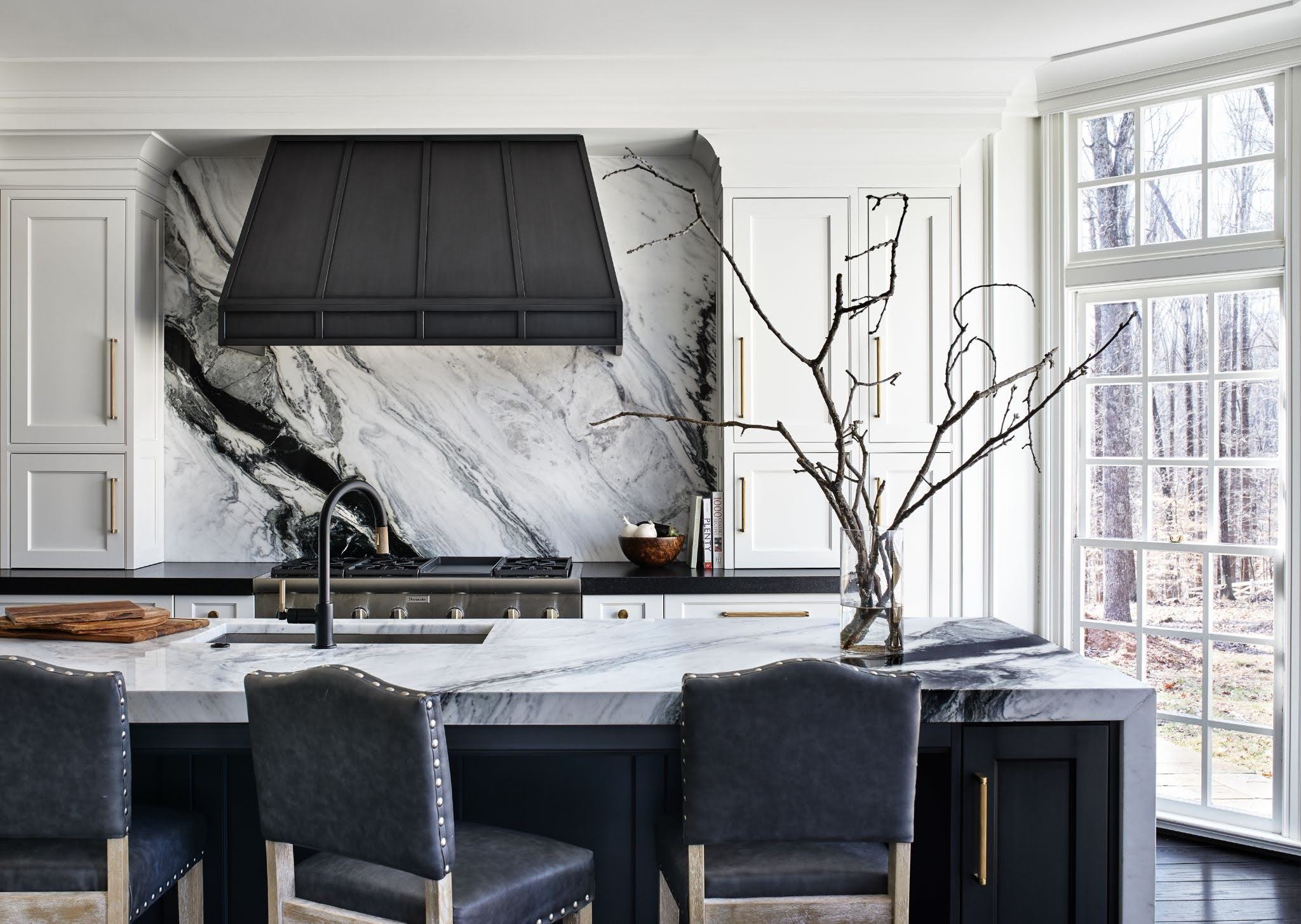
A kitchen island can become the hardest-working feature in your kitchen, but only when its size, storage, and seating are planned around the way you actually use the room. At Jack Rosen Custom Cabinetry, custom cabinetry gives you the flexibility to design an island around your kitchen's dimensions, cooking habits, storage priorities, and overall style rather than forcing a standard configuration into the space.
Whether you are renovating a compact kitchen in Washington, DC, updating a home in Maryland, or planning a larger kitchen in Northern Virginia, your island should improve movement and organization, not simply fill open floor space.
Start with the Right Kitchen Island Size
It is tempting to make an island as large as the room appears to accommodate. Bigger, however, is not automatically better.
Your island needs to work with surrounding cabinetry, appliances, doors, and walkways. Before settling on dimensions, consider:
How you move between your sink, refrigerator, and cooking area
Where appliance and cabinet doors open
How many people regularly use the kitchen
Whether the island will include seating
Which tasks you want to perform at the island
How the island relates to adjoining dining or living spaces
In a smaller DC or Maryland kitchen, a carefully proportioned island may provide the functionality you need without overwhelming the room. In a larger Northern Virginia kitchen, a more substantial island can create additional prep, storage, and gathering space.
The goal is proportion. Your island should feel like an intentional part of the cabinetry plan.
Decide What You Want Your Island to Do
Before choosing finishes or hardware, determine the island's primary purpose.
A Prep-Focused Island
If you cook frequently, you may want generous uninterrupted countertop space with drawers underneath for utensils, cutting boards, mixing bowls, and other prep essentials.
A Storage-Focused Island
If cabinetry space is limited, the island can provide valuable additional storage. Depending on your needs, custom island cabinetry can incorporate:
Deep drawers for pots and pans
Tray and cutting board dividers
Pull-out storage
Shelving for frequently used items
Cabinets for serving pieces
Concealed waste and recycling storage
With custom cabinetry, you can plan these features around what you own instead of adapting your belongings to predetermined cabinet dimensions.
Plan Kitchen Island Seating Carefully
An island often doubles as a gathering place for breakfast, casual meals, conversation, or homework. If seating matters to you, incorporate it from the beginning rather than adding stools after the cabinetry has been designed.
Think about:
How many seats you actually need
Where people will enter and leave the seating area
Whether stools interfere with nearby walkways
How seating relates to your dining area
Whether you prefer seating along one side or around a corner
In an open-concept kitchen, island seating can also create a subtle transition between the kitchen and adjacent living space.
Use Both Sides of Your Island
One advantage of a custom kitchen island is the ability to make multiple sides functional.
The kitchen-facing side can hold cookware, preparation tools, or everyday dishes, while the outward-facing side can provide additional storage for less frequently used items.
You might use that secondary cabinetry for:
Holiday serving pieces
Table linens
Entertaining accessories
Specialty cookware
Extra dishware
This approach can add meaningful storage without introducing another cabinet wall.
If you are unsure which configuration makes the best use of your kitchen, you can schedule a free design consultation to explore island layouts tailored to your available space and storage priorities.
Coordinate Materials and Finishes
Your island does not have to match every cabinet surrounding it. It can either blend seamlessly with the kitchen or operate as a deliberate focal point.
Create a Cohesive Island
Using the same cabinetry finish throughout the kitchen creates a unified appearance that can work particularly well when you want other materials to take visual priority.
Introduce Contrast
You can also distinguish the island through a contrasting painted finish or natural wood. The important consideration is ensuring the island still relates to surrounding cabinetry, countertops, flooring, and architectural details.
Custom cabinetry gives you greater flexibility over cabinet dimensions, interior configurations, wood selections, finishes, and hardware, allowing those details to be considered together.
Consider Appliances and Utilities Early
If your island will contain a sink, dishwasher, microwave, or another appliance, address those requirements during the layout stage. Appliance placement influences both storage and workflow, and incorporating it early can prevent the island from becoming visually or functionally crowded.
Ask yourself whether placing an appliance in the island genuinely improves the way you use the kitchen or simply takes away valuable drawers and cabinets.
Make the Island Fit Your Home
Homes throughout the Maryland, Washington, DC, and Northern Virginia service area vary considerably in age, architecture, and kitchen footprint. A custom island allows the design to respond to those differences.
Instead of choosing an island because a particular style is popular, focus on what your kitchen needs. In a tight layout, that could mean efficient storage and carefully controlled proportions. In a larger kitchen, the priority might be seating, entertaining, and multiple work zones.
Build a Kitchen Island Around the Way You Live
The best custom kitchen island brings several needs together: comfortable movement, useful storage, appropriate seating, durable materials, and a design that belongs in your home.
When you plan those elements as part of the complete cabinetry layout, your island becomes much more than an attractive centerpiece. It becomes a practical part of how you cook, gather, entertain, and organize your kitchen every day.
If you are considering a new kitchen island, request a free estimate or contact Jack Rosen Custom Cabinetry to explore a custom cabinetry design tailored to your kitchen in Maryland, Washington, DC, or Northern Virginia.


